Tuesday, January 13, 2009

Hihihihihi

Ok, so my blog is almost finished. i hope you like what i've done so far, and seen how much effort i've put into it.

http://i41.photobucket.com/albums/e267/Cj_Lemon/cute_animals_09.jpghttp://blog.wired.com/photos/uncategorized/0102078622600.jpg
http://i203.photobucket.com/albums/aa3/Asagi_McGuire/Cute%20Animals/CuteAnimals20.jpgThe image “http://www.vixed.com/vixed/pictures/Cuteness/cute_animals2.jpg” cannot be displayed, because it contains errors.

Fishing Industry

The Fishing Industry

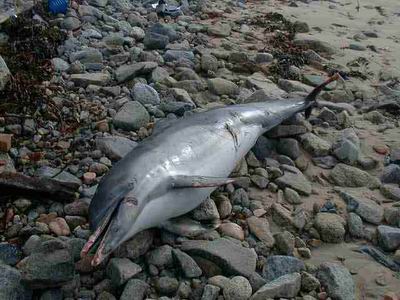
When fishermen are using trawl nets, not only the acquired fish are caught. More than that, 70% of the catch is thrown back overboard, because the fish are too small to be legally justified for sale, or because the admitted quota is reached, or even because the fish is not interesting, commercially speaking. The fish that are thrown overboard often are already crushed to death, choked, or died in another way. Anyone who isn't touched by the suffering of fish during the catch, is referred to the additional catch of e.g. mammals like dolphins, which are often caught at the tuna catch.
The trawl nets destroy the bottom of the sea, as a result of which the ecological system is completely out of balance, and lost for a long time. The seas are almost emptied and left completely disturbed. At this moment the total file of fish on earth is 50% of what it used to be a few decades ago. Fish is not only caught; it is also bred. Some fish, like salmon, are raised in very large floating tanks; this way of breeding looks exactly like factory farming, with all its disadvantages.

Dolphins are often tied up in the nets that have a length of some miles, and they cannot escape a slow drowning death.


***This article is proving a point about fish cruelty. When you think of cruelty you mostly think about dog, cat, or "house" pet cruelty. There is animal cruelty all around you! including FISH. Fishermen kill fish for no reason while netting them in. 100's of fish die each time they are thrown back in because they are "too small

Farming abuse

When chicks crawl out of their eggs in the hatchery, they are moved to a laying or fattening farm, depending on their race and sex. The young cocks are 'worthless' and are killed with carbon dioxide in a plastic bag or they are shredded. The chicks that go to the battery will live in a shed with long rows of cages made of wire mesh, with three or more storeys on top of each other. The animals live in small cages, 4 chickens are crammed together; the cages have a dimension of 45x50cm (like a large computer monitor). They lay their eggs on the wire mesh and cannot spread their wings. As a result of this distressing situation they peck at each other. That's why their beaks are burnt (without anaesthesia). The chickens don't have a roost to sleep on and a disrupted day/night rhythm is forced on them, to have them lay as many eggs as possible.


***Most chickens in meat packing factories are highly abused. They are the #1 abused animal in the world. They are forced to sit in cages with 100's of other chickens, lying eggs, and no room what so ever to move around. Pretty disgusting huh?

Circuse abuse #2

Living conditions: Most animals used in the circus are meant to live in the wild. Instead of their natural habitats where they would roam free and live on their natural instincts, they are forced to live and travel in cramped quarters far smaller than their habitats in the wild. They are often forced to eat, sleep and even defecate in the same place. Circuses travel to many locations and water is limited in some locations, bathing and cleaning the animals living quarters is given low priority where water is limited. Unfortunately, this limitation extends to their drinking water as well.
Elephants are kept with their feet chained down for long periods of time. Baby elephants are prematurely removed from their mothers for the purpose of early training. They are tied with ropes, which leads to rope burn. Many circuses give no consideration to climate and the animals are exposed to extreme heat or cold. In addition, their diets do not consist of what they would naturally and they are sometimes underfed in the interest of getting an ideal performance. Disease is common among circus animals. Veterinarians qualified to treat exotic animals are not always present and circus animals frequently suffer inadequate veterinary care.
Training: Ever wonder how circuses manage to get the animals to perform so well? Animals do not perform the acts you see in the circus naturally. They have to be trained, often by extreme methods. They are traumatized in to obeying their human ‘trainers” commands. Bull hooks are often driven in to the tender areas of an elephant’s body to make it cooperate. Electric shock, whips, baseball bats and pipes are also among the methods used to force the animals to cooperate in training. Some animals are kept muzzled to subdue them and discourage them from defending themselves if they feel threatened. Some animals are drugged to make them manageable and some have their teeth removed. Some bears have had their paws burned to force them to stand on their hind legs.
Mental distress: the combination of the above circumstances and other factors lead to mental distress in circus animals. There have been many cases of animals attacking humans and escaping.
Since 1990, attacks by captive big cats have resulted in 46 humans deaths and the killing of 70 big cats
Since 1990, 13 humans have been killed by captive bears. 8 of them were children. Attacks have also resulted in 26 bears being killed
Since 1990, attacks by captive primates have resulted in 2 humans deaths, 130 human injuries, and the killing of 450 primates.
Since 1990, 57 people have been killed by captive elephants.120 people were injured.
When you think about how they are treated, can you blame them for attacking? What must they think of humans? They don’t ask for the miserable lifestyle circus performance subjects them to
“Retirement” for circus animals: As with many other forms of animal “entertainment”, once the animal can no longer perform, it is not much value to the circus. They may be permanently caged, sold to a game farm to be hunted, or sold to a lab.


***Again, this article is containing to the other circus abuse article in a way. They are trying to force you to realize that the animals they use in the circus are meant to be WILD animals; not animals stuck in little cages doing tricks for OUR entertainment.

Circus abuse

The fact is, animals do not naturally ride bicycles, stand on their heads, balance on balls, or jump through rings of fire. To force them to perform these confusing and physically uncomfortable tricks, trainers use whips, tight collars, muzzles, electric prods, bull hooks, and other painful tools of the trade.

**This article is right. Animals are not made to ride bicycles and stand on their head. When you go to a circus, and applaud these animals i am sure you don't think about the pain and suffering they had to go through to entertain us. I wish some people would look at it that way and put a stop to this crime.

Animal abuse

Women residing at domestic violence shelters (S group) were nearly 11 times more likely to report that their partner had hurt or killed pets than a comparison group of women who said they had not experienced intimate violence (NS group). Reports of threatened harm to pets were more than 4 times higher for the S group. Using the Conflict Tactics Scale, the authors demonstrated that severe physical violence was a significant predictor of pet abuse. The vast majority of shelter women described being emotionally close to their pets and distraught by the abuse family pets experienced. Children were often exposed to pet abuse, and most reported being distressed by these experiences. A substantial minority of S-group women reported that their concern for their pets' welfare prevented them from seeking shelter sooner. This seemed truer for women without children, who may have had stronger pet attachments. This obstacle to seeking safety should be addressed by domestic violence agencies.


***This article is practically saying that it is proven that most people who abuse animals, grow up to abuse humans. To me i think it sounds correct. It makes sense to me that if you abuse animals, it would be easier to abuse a human.

Wednesday, January 7, 2009

Michael Vick's Dog Fighting

A search warrant has been issued for a property in Surry County owned by NFL Atlanta Falcons star quarterback Michael Vick.

Vick does not live at the home. It is inhabited by Vick's nephew. Police said Vick does not spend much time on the property.

The search warrant was granted by the Surry County Circuit Court. A state task force went to the property searching for a person that they believed may be on the property, but the person was not Vick. Investigators would not reveal the name of the person they were searching for.

While investigators were at the property, they discovered three buildings behind the home that housed several barking dogs.

"When they had a chance to go to the site, they discovered animal neglect," Surry County Administrator Tyrone Franklin.

Franklin said that the dogs appeared to be hungry and forgotten.

Both state and county investigators were searching the property Wednesday afternoon. Several animal control trucks were also on the scene and dog barking was audible.

No further information about the warrant has been released at this time. More information will be available after the investigation is complete.

Early reports indicate that Vick was allegedly running a dog-fighting and cockfighting operation from the back of the home. The Virginia Animal Fighting Taskforce was on the scene. Authorities report that Vick had been under investigation for several years for illegal animal fighting.


*****
Michael Vick was a famous NFL player who was accused of dog fighting. They issued a search warrant for Vick's house, and when they did go and look at it they found many barking dogs, and discovered animal neglect. Reports indicate that Vick was allegedly running a dog-fighting and cockfighting operation from the back of the home.